
Le Marais Tour
From medieval marshland to the most beloved corner of old Paris: a neighbourhood where every century left its mark.
And the Marais is, of course, more than just history. During the walk we also tell you about the Marais of today and give you tips for great places to eat, drink or explore afterwards.
What to expect
History and the Paris of today
800 years of history in layers
From medieval houses to Renaissance palaces: every century left a physical mark here.
The Marais of today
The Marais is today a lively mix of cafés, restaurants, shops and different communities. The district is also known as the centre of LGBTQ+ life in Paris.
Tips for the rest of your stay
Where to find the best falafel and which cafés and shops in the district you shouldn't miss.
Is this tour for you?
Who this walk suits
This walk is for you if you want to fully see and feel the history of Paris.
This tour is for you if...
- You love medieval and Renaissance architecture
- You want to discover both the old and the contemporary Marais
- You enjoy a flat, relaxed route
Maybe less suitable if...
- You are mainly looking for the big iconic monuments
- You want an intensive, long walk
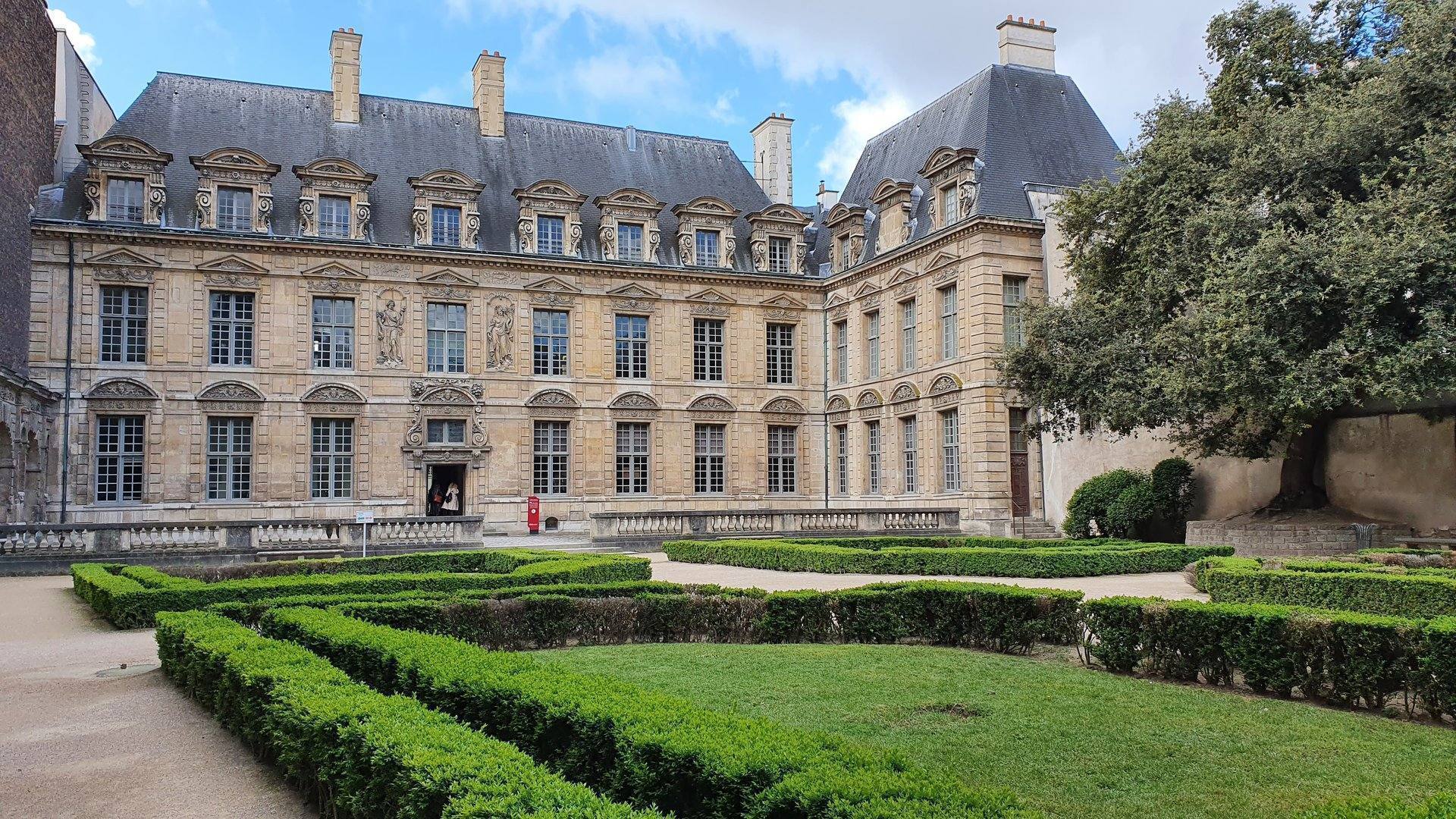
Le Marais owes its name to a marsh no one wanted - until the nobility had the city's finest hôtels particuliers built here in the 17th century. You see those layers everywhere: medieval half-timbered houses next to Renaissance palaces, Paris's longest city wall next to a lively Jewish quarter.
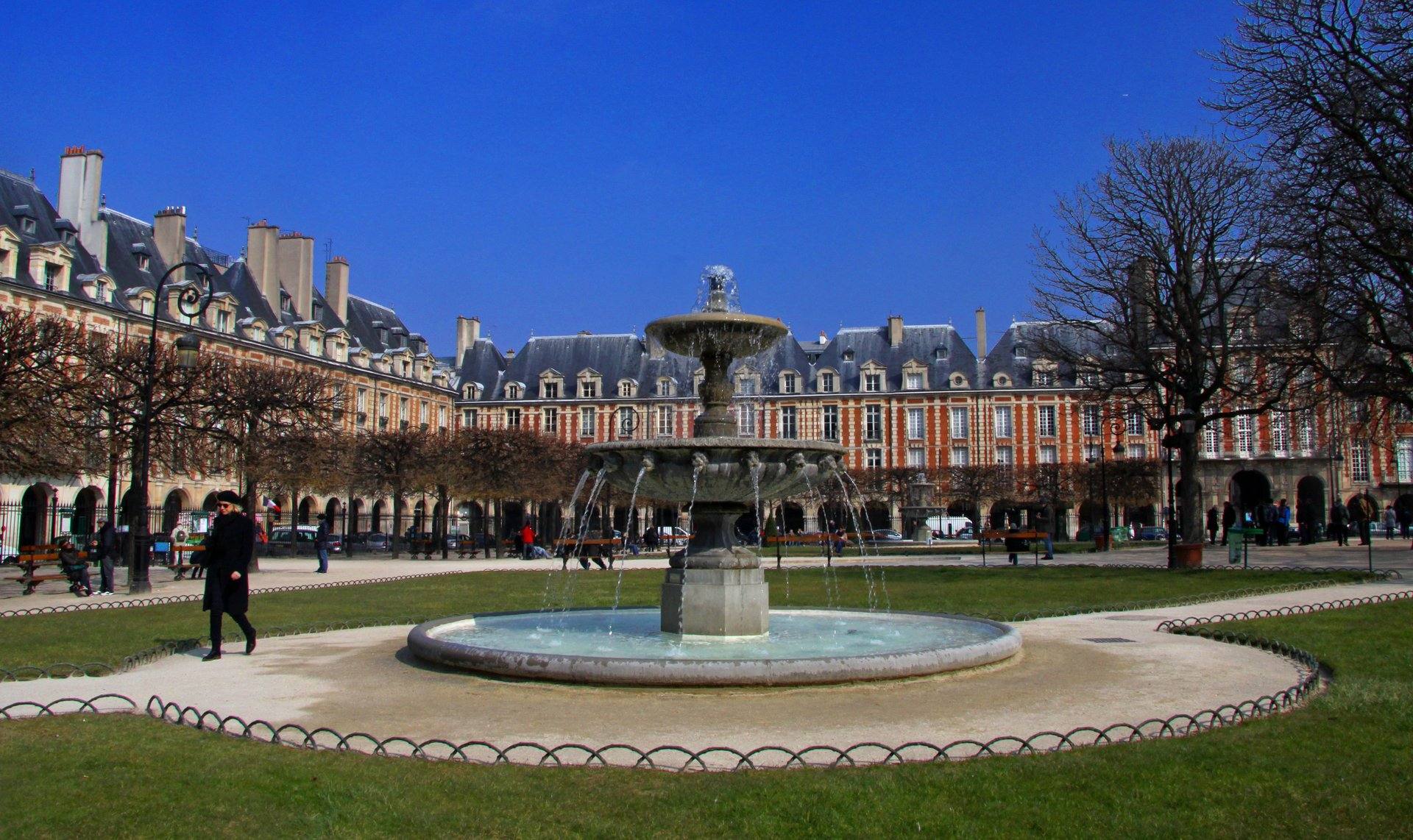
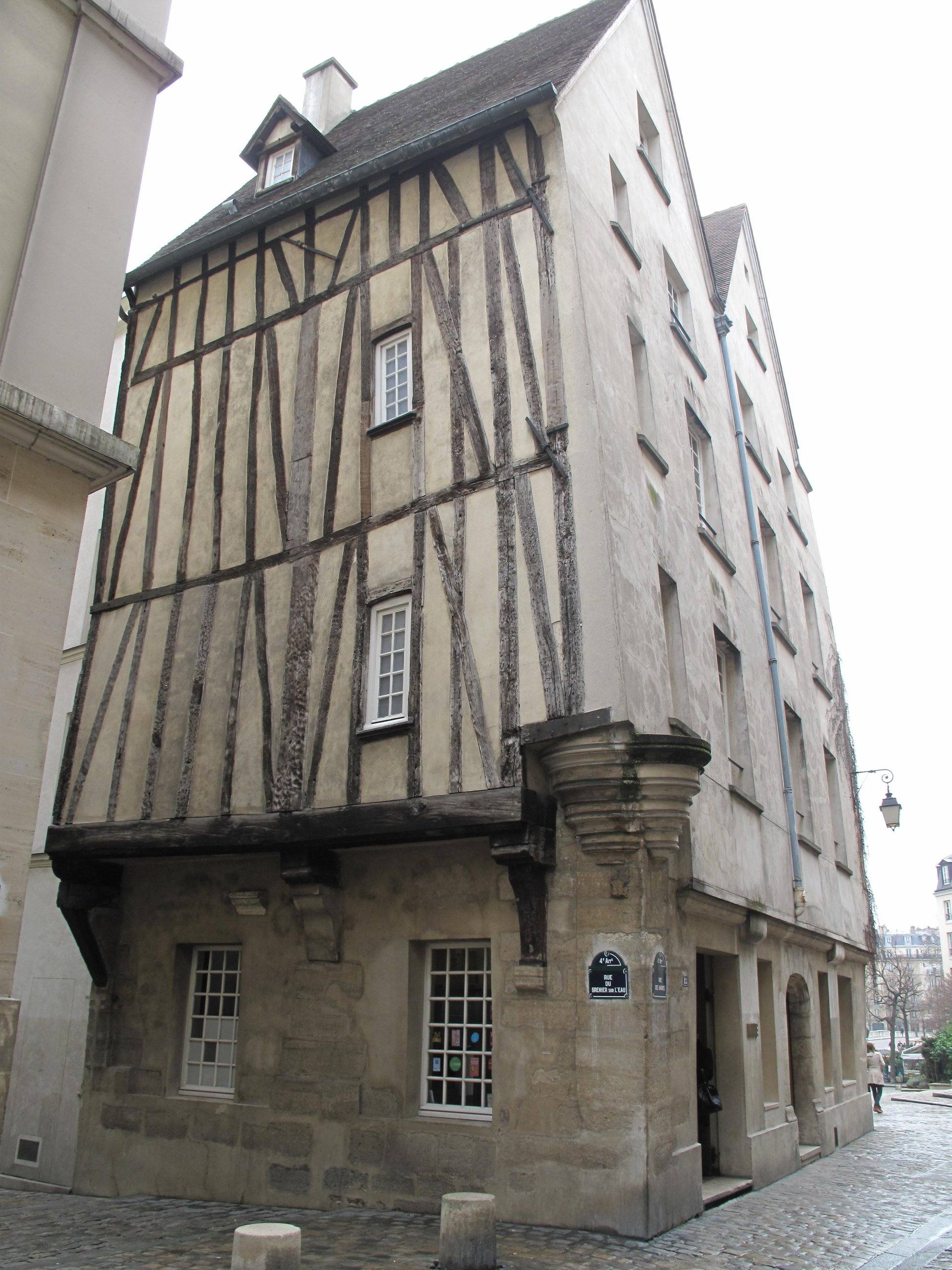
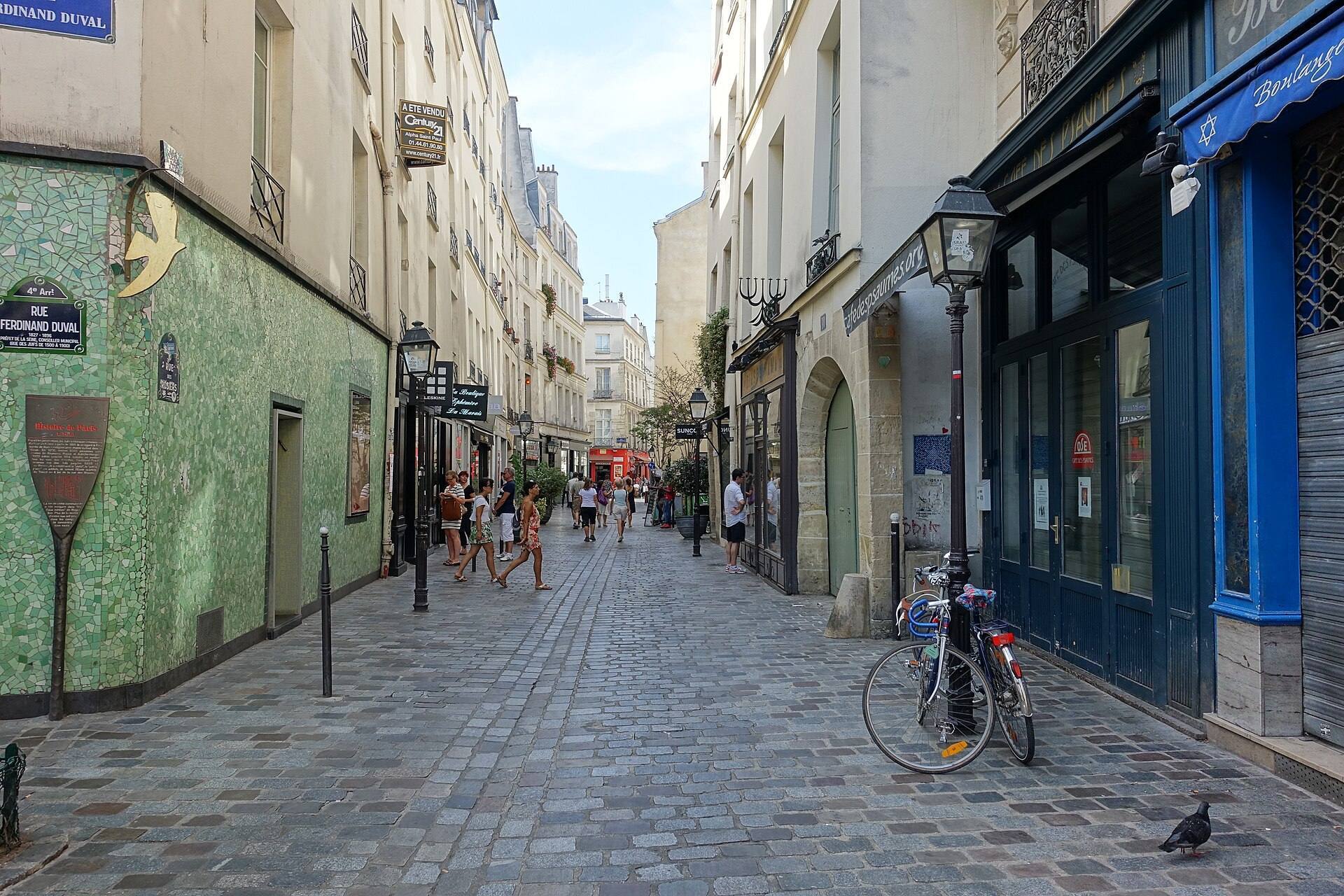
We start at the Place de l'Hôtel de Ville, once the beach where merchants unloaded their ships and where public executions took place. The route passes the oldest houses in Paris (14th century), the city's first baroque church and the Hôtel de Sens, with the cannonball from the July Revolution still embedded in its façade. Through the hidden courtyards of the Village Saint-Paul and the Rue des Rosiers - home to Paris's most famous falafel - we walk to the Place des Vosges, where Victor Hugo lived.
Every stop has a physical remnant: not 'this once stood here', but 'you can still see it here'. From the water merchants who governed the city to the law that saved this district from demolition in 1962.
Highlights
-
The oldest surviving houses in Paris (Rue François Miron, 14th century)
-
The longest visible stretch of Philippe Auguste's city wall (±1190)
-
The hidden courtyards of the Village Saint-Paul
-
The Jewish Paris of the Rue des Rosiers (and the city's best falafel)
-
Paris's first baroque church and the Hôtel de Sully
-
Place des Vosges: the square of Henri IV and Victor Hugo
Practical info
- Meeting point
-
Place de l'Hôtel de Ville (Métro Hôtel de Ville)
 1 11
1 11
- End
-
Rue des Rosiers (Métro Saint-Paul)
1
- Distance
- 3 km, flat
- Duration
- about 2 hours
- Languages
- Max group size
- 10 people
Choose your language when you book.
- Cancellation
- Free cancellation up to 24 hours before the start of the walk.
- Info
-
- Walks leave on time, so arrive at the meeting point at least 10 minutes before departure.
- In the confirmation email you will find the exact starting location and how to easily recognise your guide.
- Depending on the specific tour, a minimum number of participants is required for a tour to run. If this minimum is not reached, the tour may be cancelled and you will receive a full refund.
Frequently asked questions
Tours generally go ahead in the rain. Paris is well worth a visit even without sunshine. In exceptionally bad or unsafe weather we may adjust the route or cancel the tour. If that happens, we will of course get in touch with you.
The price of the tour includes your guide, but excludes any entrance tickets for museums, monuments or other sights that charge admission. If we visit a place on a tour that requires entry, we clearly mention this in advance on the relevant tour page.
Some churches and other sights are free to enter. Depending on the route and circumstances, we can briefly step inside without you needing a ticket.
Yes, children are welcome. Whether a particular tour suits young children depends mainly on their age and interests. That is why each tour page gives more information about the character and intensity of the walk. Unsure? Feel free to contact us.
Wear comfortable shoes and clothing suited to the weather. We walk through Paris and stop regularly along the way.
Please also note that on some tours we may step inside a church. There are no entry fees, but visitors are asked to dress appropriately. Please cover your shoulders and knees if you expect to enter a church. Shorts or a skirt just above the knee are generally fine, but very short clothing or bare midriffs are less suitable.
Le Marais has something many other parts of Paris have lost: much of its historic layout and architecture has been preserved. On the walk you therefore see not just individual monuments, but whole streets and buildings that show what Paris used to look like.
More than you might expect. Along the way we pass the oldest surviving houses in Paris and one of the best-preserved visible sections of the medieval city wall. In several places you can literally see how old Paris looked.
Because the different historic layers lie close together here. You do not have to walk far to go from medieval Paris to the 17th century and then to the Marais of today.
Le Marais has long been the main centre of LGBTQ+ life in Paris. Especially since the 1980s, many cafes, bars, shops and other meeting places have opened here, particularly around Rue des Archives and Rue Sainte-Croix-de-la-Bretonnerie.
During the walk we pay attention to this relatively recent layer of Le Marais's history. You see how a neighbourhood that has been constantly changing for centuries also holds new meanings and communities today.
Other tours
- Montmartre Tour Walk through the village that never quite became part of Paris: the hill of Picasso, Van Gogh and Dalida, crowned by th…
- From the Parisii to Napoleon Tour One route through 2000 years of Paris: from Roman Lutetia, via the French Revolution, to Napoleon - chronologically, al…
- Covered Passages Tour Hidden galleries from the 19th century: mosaic floors, glass roofs and the Paris of before the great boulevards.
- Private Tour A private walking tour through Paris, fully tailored - your neighbourhood, your pace, your guide.
Still have questions?
Can't find the answer you're looking for? We're happy to help.
€39
about 2 hours